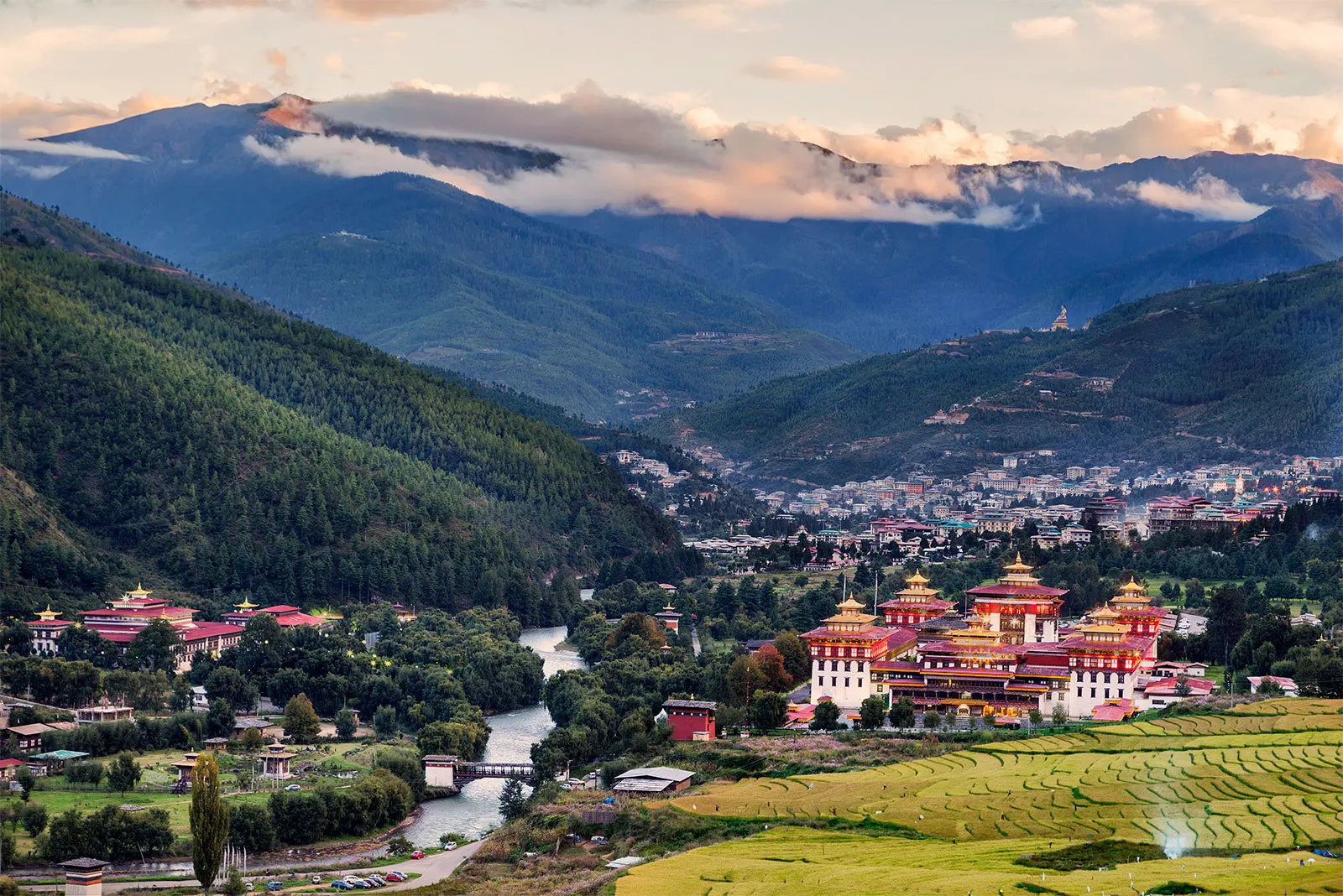
Bhutan is one of the most unique and peaceful travel destinations in the Himalayas. Known for its dramatic mountain landscapes, ancient monasteries, colorful festivals, traditional dzongs, and untouched valleys, Bhutan offers travelers a rare combination of natural beauty and spiritual culture.
From the iconic Tiger’s Nest Monastery in Paro to the historic Punakha Dzong, the quiet Haa Valley, the cultural heartland of Bumthang, and the beautiful Phobjikha Valley, Bhutan is filled with unforgettable places to explore. This guide highlights the most beautiful sites and must-visit attractions in Bhutan for travelers planning a meaningful journey.
Top Places to Visit in Bhutan
Bhutan is a country where every valley has its own story. The country is famous for monasteries, prayer flags, mountain passes, sacred temples, traditional markets, and warm local hospitality. Whether you are interested in culture, photography, hiking, festivals, or peaceful landscapes, Bhutan has something memorable to offer.
Bumthang Valley
Bumthang Valley is often called the cultural heart of Bhutan. The region is known for its ancient monasteries, sacred temples, open valleys, and traditional festivals. Bumthang is actually made up of four valleys: Chhume, Ura, Thang, and Jakar, also known as Chokhor.
Jakar is the largest town in the region and is often the main base for travelers visiting Bumthang. The peaceful landscape, rolling hills, and spiritual atmosphere make this area ideal for visitors who want to experience Bhutan’s traditional culture at a slower pace.
Bumthang is also a good destination for hiking, mountain biking, monastery visits, and cultural exploration. Travelers interested in history and religion can easily spend three to four days discovering the beauty of this region.
Chele La Pass
Chele La is one of the highest motorable passes in Bhutan, located between Paro and Haa at an altitude of about 3,810 meters. The pass is decorated with tall prayer flags and colorful banners that flutter beautifully in the mountain wind.
On clear days, Chele La offers breathtaking views of Jomolhari and other snow-covered Himalayan peaks. During winter, the pass may be covered with snow and ice, creating a dramatic mountain atmosphere. From Chele La, travelers can also hike toward Kila Nunnery.
Nebu Chorten
Nebu Chorten is a peaceful monastery located above Paro. A scenic walking route through traditional settlements leads visitors to this sacred place. Along the way, travelers may see rhododendrons, orange trees, and other beautiful natural surroundings.
Inside the monastery, visitors can see a large statue of Maitreya Buddha, also known as the Buddha of the Future. The site also houses a beautiful collection of ancient scriptures wrapped in colorful silk and carefully arranged on shelves.
Dochu La
Dochu La is a famous mountain pass located at an elevation of about 3,050 meters. It is one of the most scenic stops on the route between Thimphu, Paro, Punakha, and Wangdue Phodrang.
The pass is known for its 108 stupas, built to honor Bhutanese soldiers. Many local people visit Dochu La to hang prayer flags and offer prayers. On clear days, especially between October and February, the pass offers wide views of the Himalayan range.
Dochu La is also a pleasant place to pause during a road journey. Visitors can enjoy the mountain views, take photographs, or relax at the nearby restaurant.
Festivals in Bhutan
Bhutanese festivals are among the most colorful and meaningful cultural experiences in the country. Festivals are held throughout the year, usually in and around monasteries and dzongs. These traditional celebrations often include masked dances, religious ceremonies, music, and vibrant costumes.
The most famous Bhutanese festivals are called Tsechus, which are held in honor of Guru Rinpoche. During these festivals, monks and trained dancers perform ancient dances that have been preserved for centuries.
A major highlight of some festivals is the unveiling of a Thongdrel, a massive religious tapestry made from precious fabrics. Visitors also get to see Bhutanese people dressed in their finest traditional clothing, making festivals a wonderful opportunity for cultural photography.
Travelers planning to visit Bhutan during festival dates should book hotels well in advance, as accommodation can be limited during popular festivals.
Haa Valley
Haa Valley is located in western Bhutan near the border with India and Tibet. The valley stretches from the Himalayan ranges in the north to the Amo Chhu River in the south. It is one of the most authentic and less-commercialized regions of Bhutan.
Haa Valley was opened to tourists only in 2002, which has helped preserve its traditional charm. Travelers can enjoy peaceful villages, scenic views, dzongs, monasteries, and opportunities for multi-day treks.
The valley is also known as a hidden land where visitors can interact with local people and experience a quieter side of Bhutan.
Juneydrak Hermitage – The Little Tiger’s Nest
Juneydrak Hermitage, also known as the Little Tiger’s Nest, is a sacred cliffside site in the Haa Valley. The journey to this hermitage involves a beautiful but challenging hike, including steep paths and narrow rock passages.
The hermitage is built high on a cliff face and offers a deeply spiritual atmosphere. Visitors may meet resident lamas and see sacred objects connected with Buddhist traditions. This site is ideal for adventurous travelers who want to explore a lesser-known spiritual landmark in Bhutan.
National Memorial Chorten, Thimphu
The National Memorial Chorten in Thimphu was built in memory of Bhutan’s third King, Jigme Dorji Wangchuck. It is one of the most active religious sites in the capital city.
Many Bhutanese people visit the chorten daily to pray, meditate, walk around the structure, and spin prayer wheels. In the mornings, elderly locals can often be seen spending peaceful hours here in prayer and quiet reflection.
The white chorten, designed in Tibetan architectural style, is an important place to understand the spiritual daily life of Bhutan.
Paro Dzong
Paro Dzong, also known as Rinpung Dzong, is one of the most important structures in Paro. Built in 1644, this massive fortress-monastery stands on a hillside and overlooks the Paro Valley.
Like many dzongs in Bhutan, Paro Dzong serves both religious and administrative purposes. It houses a monastery as well as government offices. The dzong is visible from many parts of the valley and remains one of the most impressive examples of Bhutanese architecture.
Below the dzong, visitors can see the traditional covered wooden bridge called Nyamai Zam, which crosses the Paro Chhu River.
Phobjikha Valley
Phobjikha Valley is one of the most beautiful valleys in Bhutan. Located east of Punakha, the valley is known for its green hills, marshlands, open landscapes, and peaceful natural setting.
The lower part of the valley is a protected area and serves as a winter home for black-necked cranes that migrate from Tibet. Visitors can explore boardwalks, nature trails, and the Crane Center to learn more about these rare birds.
Gangtey Gompa, located above the valley, offers a panoramic view of Phobjikha. The area is perfect for nature lovers, photographers, and travelers looking for quiet Himalayan beauty.
Punakha Dzong
Punakha Dzong is one of the most important and beautiful dzongs in Bhutan. It stands at the meeting point of the Pho Chhu and Mo Chhu rivers, also known as the Father and Mother rivers.
This fortress-monastery holds great historical importance and represents the unity of Bhutan. Inside the dzong, visitors can admire traditional woodwork, sacred spaces, religious halls, and the peaceful atmosphere of monastic life.
Punakha Dzong is especially photogenic because of its riverside location, traditional architecture, and surrounding mountain scenery.
Royal Manas National Park
Royal Manas National Park is Bhutan’s oldest national park and one of the richest wildlife areas in the country. The park covers around 1,057 square kilometers and connects with protected forests in India.
The park is home to Bengal tigers, golden langurs, hornbills, gaur, wild water buffalo, Indian rhinoceroses, and many bird species. Although tiger sightings are rare due to dense forest, the park is valued for its wilderness, scenery, and biodiversity.
Royal Manas National Park is a wonderful destination for travelers interested in nature, wildlife, birdwatching, and offbeat Bhutan experiences.
Tashichho Dzong, Thimphu
Tashichho Dzong is a magnificent fortress in Thimphu and one of the most important landmarks in Bhutan. The name means “Fortress of Glorious Religion.”
The dzong houses government offices, temples, and monastic spaces. Since 1952, it has served as the seat of Bhutan’s government. It is also the summer residence of the Je Khenpo, the country’s spiritual leader, and the central monastic body.
Visitors can explore the dzong in the late afternoon on working days or during open hours on weekends. Its grand architecture and peaceful surroundings make it a must-visit site in Thimphu.
Tiger’s Nest Monastery
Tiger’s Nest Monastery, also known as Taktsang Monastery, is Bhutan’s most famous landmark. Perched dramatically on a cliff about 800 meters above the Paro Valley, it is one of the most breathtaking religious sites in the world.
The monastery was built in 1692 in honor of Guru Rinpoche, who is believed to have brought Buddhism to Bhutan. According to legend, Guru Rinpoche arrived at this site on the back of a tigress and meditated in a cave for three months.
The hike to Tiger’s Nest is challenging but rewarding. From the top, visitors are treated to unforgettable views of the Paro Valley and the surrounding mountains.
Gangtey
Gangtey is the most important settlement in the Phobjikha Valley and is closely associated with Gangtey Gompa. Because of the monastery’s importance, Phobjikha Valley is often referred to as Gangtey Valley.
Gangtey Gompa was built on a hilltop overlooking the valley and remains an important spiritual site. The annual Gangtey Tsechu festival is celebrated here in September or October and includes traditional masked dances and the unfurling of a large Thongdrel.
During winter, the valley becomes cold and may be covered with snow, while many local residents move to warmer areas.
Jakar
Jakar is the largest town in Bumthang and an important cultural center in central-eastern Bhutan. It is located in the Jakar Valley, also known as Chokhor or Choekor.
The main attraction in Jakar is Jakar Dzong, a massive fortress built in 1667. The name Jakar means “White Bird,” based on a local legend in which a white bird identified the ideal location for the dzong.
Other important sites near Jakar include Kurje Lhakhang, associated with Guru Rinpoche, and Jambay Lhakhang, one of the oldest temples in the region.
Mongar
Mongar is located in eastern Bhutan and is known for its hillside setting. Unlike many western Bhutanese towns that sit in valleys, Mongar is built on the slopes.
Mongar Dzong is unique because it differs from the standard dzong design. It has two entrances and a shared central courtyard used by both monks and administrative officials. Around 80 monks and nuns live within the dzong.
Paro
Paro is one of Bhutan’s most important towns and the location of the country’s international airport. Flying into Paro offers spectacular views of the Himalayas and gives travelers a memorable first impression of Bhutan.
The town is known for colorful buildings, narrow lanes, clean air, and a peaceful atmosphere. Major attractions in and around Paro include Tiger’s Nest Monastery, Paro Dzong, and the National Museum, which is housed in an old watchtower.
Phuentsholing
Phuentsholing is a border town in southwestern Bhutan and serves as an important gateway between Bhutan and India. Its counterpart on the Indian side is Jaigaon.
The town is busy and often used as a logistical stop for travelers entering or leaving Bhutan by road. While it is not usually a destination for a long stay, it plays an important role in travel connections between Bhutan and India.
Punakha
Punakha was the capital of Bhutan for more than 300 years and remains one of the country’s most historically important regions. The main attraction is the magnificent Punakha Dzong, located between two rivers.
Near Punakha, visitors can also hike to Chimi Lhakhang, a small monastery associated with fertility blessings. The walk passes through rice fields and traditional villages, offering a glimpse of rural Bhutanese life.
Punakha Valley is known for its mild climate, red rice cultivation, riverside walks, and peaceful farming villages.
Thimphu
Thimphu is the capital city of Bhutan and one of the smallest capital cities in the world. Located on the Wang Chu River at an altitude of about 2,400 meters, Thimphu combines traditional Bhutanese culture with modern city life.
Important places to visit in Thimphu include Tashichho Dzong, National Memorial Chorten, the Golden Buddha, Changangkha Lhakhang, and the Weekend Market.
Thimphu is also famous for being the only capital city in the world without traffic lights. Instead, traffic is directed by police officers using graceful hand movements, which has become a popular sight for visitors.
Trashigang
Trashigang is located in eastern Bhutan and is one of the least-visited but most interesting towns in the region. It marks the eastern end of the East-West Highway.
The town is home to Trashigang Dzong, built in 1667. For several centuries, this dzong played an important role in governing eastern Bhutan. Inside the dzong, visitors may find temples and religious artwork connected with Buddhist traditions.
Trongsa
Trongsa lies near the geographical center of Bhutan and is famous for its massive dzong and historic watchtower. The town appears dramatically on the mountain slopes, and reaching it by road involves winding through scenic hills.
Trongsa Dzong is one of the most impressive fortresses in Bhutan. Traditionally, Bhutanese kings served as the Governor of Trongsa before ascending the throne, giving the town great royal importance.
The watchtower now functions as a museum and is a good place to learn more about Bhutan’s royal history.
Wangdue Phodrang
Wangdue Phodrang, also known as Wangdi, is located in central Bhutan near Punakha. The town sits along the banks of the Punak Tsang River and has a pleasant climate, even during winter.
The region was once known for Wangdue Phodrang Dzong, which was severely damaged by fire in 2012. Reconstruction work has been carried out to restore this important fortress-monastery.
Wangdue Phodrang is often visited together with Punakha and Phobjikha Valley due to its convenient location in central Bhutan.
Best Bhutan Travel Experiences
- Hike to the iconic Tiger’s Nest Monastery in Paro
- Visit Punakha Dzong at the confluence of two rivers
- Explore Thimphu’s monasteries, markets, and cultural landmarks
- Enjoy panoramic Himalayan views from Dochu La and Chele La
- Experience traditional Bhutanese Tsechu festivals
- Discover the peaceful valleys of Bumthang, Haa, and Phobjikha
- Watch black-necked cranes in Phobjikha Valley during winter
- Explore eastern Bhutan through Mongar and Trashigang
FAQs About Places to Visit in Bhutan
What is the most famous place to visit in Bhutan?
Tiger’s Nest Monastery in Paro is the most famous place to visit in Bhutan. It is built on a cliff above the Paro Valley and is considered the country’s most iconic landmark.
Which are the best cultural places in Bhutan?
Bumthang Valley, Punakha Dzong, Paro Dzong, Tashichho Dzong, and Trongsa Dzong are among the best cultural places to visit in Bhutan.
Is Bhutan good for nature lovers?
Yes, Bhutan is excellent for nature lovers. Phobjikha Valley, Haa Valley, Royal Manas National Park, Chele La, Dochu La, and Bumthang offer beautiful landscapes, wildlife, mountains, and peaceful valleys.
When is the best time to visit Bhutan?
The best time to visit Bhutan is usually spring and autumn. These seasons offer pleasant weather, clear mountain views, and opportunities to attend traditional festivals.
Are Bhutan festivals worth visiting?
Yes, Bhutanese festivals are a major cultural highlight. They include masked dances, traditional music, colorful costumes, religious rituals, and local celebrations.
How many days are enough for Bhutan?
A short Bhutan trip can be planned for five to seven days, covering Paro, Thimphu, and Punakha. For a deeper experience including Bumthang, Phobjikha, or eastern Bhutan, ten to fourteen days are recommended.
Plan Your Bhutan Journey
Bhutan is a destination that offers much more than sightseeing. It allows travelers to experience ancient traditions, peaceful landscapes, spiritual monasteries, and warm local culture. Whether you are visiting for the first time or planning a detailed cultural tour, these unforgettable sites of Bhutan will help you discover the true beauty of the Himalayan kingdom.