
During this self-guided tour, you’ll visit some of the most beautiful places in northern India. After exploring Delhi, you’ll discover the rich culture and history of the state of Rajasthan. Palaces, forts, deserts—you’ll find it all. In Agra, you’ll undoubtedly visit the world-famous Taj Mahal, and in Khajuraho, the famous temples with their erotic imagery are on your agenda. The trip concludes with a visit to Varanasi, where you’ll experience the unique significance of the Ganges River. Overnight stays are available in charming, unique (heritage) hotels and guesthouses. If you prefer more luxurious accommodations, that’s certainly possible. Because you’ll travel by car with a private driver and local guide, you’ll get to experience the real India.
Why this trip?
- Overnight stays in unique, atmospheric (heritage) hotels and guesthouses
- Desert cities and magnificent Varanasi
- Car transportation with a private driver
- Train travel, completely local-style
- Entrance fees and a local (English-speaking) guide to the sights are included
- Domestic flights included to save time
Your journey begins today with the "best travel agent in India." Upon arrival at New Delhi International Airport, our representatives will welcome you and escort you to your first, attractive accommodation.
The capital, New Delhi, and several smaller towns make up the Delhi region. Most of the population lives within a 1,500 km² area, in seven cities that have emerged throughout history. The city is India's largest political center and the largest commercial hub in northern India. This is the result of migration from across the country, rapid development and urbanization, and a relatively high average income. It is also a cultural hub with universities, theaters, museums, galleries, and historic buildings dating back to the Mughal period.
Note: The best travel agents in India can also arrange your international flights.
Today's tour includes a city tour of New Delhi and Old Delhi. The main difference between the two parts of the city is that New Delhi was settled by the British. This gives this part of the city a British feel, and unlike Old Delhi, it is systematically built. During the city tour, you'll see the Red Fort (outside), Rajghat (Mahatma Gandhi's memorial), the vibrant market area of Chandni Chowk, the magnificent Qutub Minar, and the tomb of Mughal Emperor Humayun.
Tip: Explore Old Delhi by rickshaw; this is a great way to experience the narrow streets and bustling markets in a unique way. Rickshaw tours start very early (around 6:00 am) to avoid the crowds and heat. Along the way, you can, of course, stop at the market stalls to sample local delicacies like parathas and tea. This is an adventurous and atmospheric way to experience the old city in its full glory. Ask your travel specialist about the possibilities.
After breakfast, you will travel by car to Mandawa with a private driver. The drive is approximately six hours (about 260 km). Mandawa is best known for its beautifully painted havelis and mosaics. In the afternoon, you can explore this small town with its old-world atmosphere on your own and visit its famous havelis, such as the Bansidhar Newatia Haveli, the Murmuria Haveli, and the Sevaram Saraf Haveli.
Overnight in Mandawa.
This morning, a tour of the town of Mandawa is planned. Beautiful, colorful houses line the streets, making the place bustling with activity. Each house and small palace is adorned with Shekhawati paintings, known for their distinctive character and rich colors. It's hard to imagine what they once looked like.
Then, a four-hour journey continues to Bikaner, where you'll spend the night. Once there, you can relax for the rest of the day. Bikaner is a unique desert town with a lovely old town and is known for its annual camel fair. This fair is held every January and features many cultural activities, including dance performances. Inside the city walls, you'll find palaces, forts, and old houses made of pink-red sandstone.
The day begins with a tour of Bikaner city. This desert city lies on the old caravan routes from West Asia and Africa. Rich in culture and tradition, time seems to have stood still here. Bikaner's most famous landmark is Junagarh Fort, built to protect the people of Bikaner from invaders. This 16th-century fort is magnificent with its many palaces and pavilions, featuring high windows and balconies. Next, you head to Jaisalmer, about a seven-hour drive away. This city, which emerged from the desert, is also known as the "Golden City." It's perfect for wandering the streets and enjoying the aromas and colors. Once you reach Jaisalmer, the rest of the day is spent relaxing.
After breakfast, you'll tour the city of Jaisalmer. The magnificent Jaisalmer Desert Fort, towering over the desert, will definitely be on your agenda. It's no surprise that this 15th-century fort is a UNESCO World Heritage Site. You can stroll leisurely through the city within the fort walls. Patwon ki Haveli, one of the largest and most elaborately decorated merchant houses within the fort, is a must-see. Nearby, you'll find a group of 15th-century Jain temples. The buildings themselves are beautifully designed, and inside, you'll find a magnificent collection of ancient scriptures. In the afternoon, you'll head into the Thar Desert for a tour of the famous Sam Sand Dunes, where you can enjoy the sunset. Enjoy the vast desert, the tranquility, and the beautiful colors of the sand dunes. Don't forget your camera!
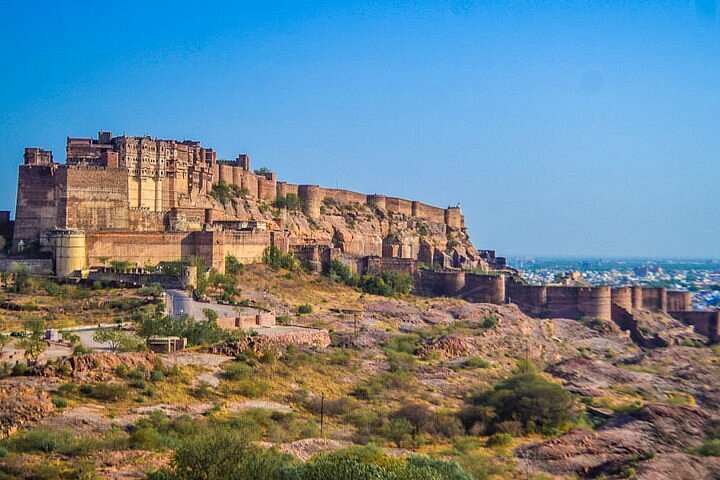
Today, you'll travel directly to Jodhpur through the desert. It's approximately a seven-hour drive. Upon arrival, you'll explore the city with your guide. Be sure to visit Mehrangarh Fort, which offers spectacular views of the Blue City. No one knows why the city's houses are blue. Legend has it that only Brahmins (members of the highest caste in the Hindu caste system) were allowed to paint their houses blue to distinguish themselves. Nowadays, anyone is free to paint their homes blue, and it's common. This makes for truly beautiful photographs! Inside the fort, you'll find a magnificent collection of paintings, weapons, and other artifacts from the region's illustrious history. Also plan to visit the white marble mausoleum, Jaswant Thada.
In the morning, you'll continue your journey to Jaipur (approximately a seven-hour drive). Upon arrival, you'll be transferred to your hotel. If time permits, you can visit the Art Museum, Govind Dev Temple, or shop at Johari Bazaar (including cotton and jewelry). Discover inspiring India! Jaipur is the capital of the state of Rajasthan and is also known as the "Pink City" because of the pink color of its buildings.
In the morning, you'll visit Amer Fort. A jeep will be waiting below the fort to take you up. You'll have plenty of time to explore the area. In the afternoon, you'll take a tour of Jaipur city. You'll see, among other things, the City Palace, Hawa Mahal (Palace of the Winds), and the Observatory. Be sure to visit the small Textile Museum in the City Palace. Here you'll see clothes worn by the former Maharajas of Jaipur, one of which weighed nearly 250 kg!
Note: We deliberately chose a jeep to travel to Amer. The elephants are treated poorly. Furthermore, the waiting time for the elephants is long, and vendors will harass you.
Today, you'll drive to Agra in about six hours. Along the way, you'll visit Fatehpur Sikri, the "abandoned city." Due to a lack of water, this former capital of the Mughal Empire is deserted. After arriving in Agra, plan to visit the Red Fort. You'll stay in a lovely guesthouse just a few minutes' walk from the world-famous Taj Mahal. You'll arrive there the next morning.
Tip: Visit Mehtab Bagh (Moonlight Garden) at sunset for a romantic view of the Taj Mahal. These gardens are located across the Yamuna River. This is a great place to enjoy the sunset without the crowds.
Early in the morning, you'll visit the Taj Mahal (closed on Fridays). The rising sun's light is mesmerizing. The Taj Mahal was built by Mughal Emperor Shah Jahan for his late wife, Mumtaz Mahal. It took nearly 20 years to complete. You'll be amazed by the beautiful details and perfect symmetry of this monument. Shah Jahan envisioned a similar monument for himself, but in black. However, it was never built. He is buried in a mausoleum next to his wife in the Taj Mahal. His tomb is the only thing in the entire building that breaks the symmetry. After this visit, you'll be taken to Agra station for the train journey to Jhansi (approximately 3.5 hours).
Along the way, you'll get a taste of local Indian life. In Jhansi, your private driver will be waiting to take you to Khajuraho, where you'll spend the night (about a four-hour drive). If you wish (and have time), you can also visit Orchha along the way.
Tip: Only essential items are allowed inside the Taj Mahal. Leave any bags in the car. Your guide will inform you of this in advance. It's also good to know in advance that the Taj Mahal tour will only take three hours. This new rule is in place to avoid overcrowding in the grounds.
Today, you'll travel with a guide to Khajuraho. This site is world-famous for its sandstone temples, which feature erotic imagery. These temples were built during the Chandela dynasty, in the 10th and 11th centuries, and are associated with both Hindu and Jain religions. They were discovered by a British officer in 1838, after which the Indian government began building tourist infrastructure. Of the original 85 temples, 22 remain in good condition. Although these temples are best known for their erotic scenes, only a small percentage of them depict images from the Kama Sutra. Today, you'll visit the Western, Eastern, and Southern Temple Complexes.
Tip: Looking to add a little more nature to your trip? Near Khajuraho, you'll find Panna National Park, home to numerous deer and birds, as well as some tigers. Feel free to inquire about the possibilities.
In the morning, you'll be transferred to Khajuraho Airport for a short domestic flight to Varanasi. You can spend the rest of the day relaxing, taking in all the sights of this colorful and unique city. You'll stay in a lovely guesthouse on the Ganges River. From here, you can easily stroll along the banks of the sacred river. In the evening, you can attend the Aarti on the banks of the Ganges.
Note: You will stay in a simple room on the Ganges River. We chose this accommodation for its authentic atmosphere and excellent location. If you prefer a more luxurious stay, we can certainly arrange another option further away from the river. Please feel free to inquire if this is possible.
Early in the morning, you will be taken on a boat trip along the Ganges River. During this boat trip, you will experience its unique significance. Meditation and bathing make the boat trip a truly spectacular experience. In the afternoon, you will travel with a guide to Sarnath (about 10 km from the city center, closed on Fridays). This is a significant site in Buddhism; after attaining enlightenment, Buddha visited this place, where, among other things, he delivered his first sermon. It is now a significant pilgrimage site. After your visit, you will return to Varanasi and spend the rest of the day relaxing.
In the morning, you will explore the city of Varanasi and visit various temples. Varanasi is also known for its silk fabrics, which were originally used to dress deities in temples. Varanasi is a center of Hindu culture and is also known for its music and art. You will experience all of this during your city tour. You can also take a boat trip on the Ganges or relax at your accommodation in the morning.
In the evening, you will depart for Delhi by overnight train (1st class), arriving the next morning (train travel time: approximately 13 hours).
Note: If you wish, you can also take a flight to Delhi; an additional charge will apply upon request.
Upon arrival in Delhi, you will be taken to your hotel near the airport. There, you can rest after the train journey and prepare for your return flight.
You will be taken to the airport in time for your return flight. This concludes your trip with best travel agents in India.
Include/Exclude
- An English-speaking assistant on arrival & 7 x 24
- A traditional welcome on arrival with fresh garland
- Local flights Khajuraho - Varanasi (Economy Class)
- Airport taxes and levies
- Train travel Agra - Jhansi (Air-Conditioned Chair Car)
- Train travel Varanasi - Delhi (First class or second class)
- Transfers and transportation will be provided by a private driver in a sedan during the tour, as specified.
- Night's stays as specified hotel or guest house as per the program
- Meals as specified in the program
- All services listed in the program above
- Sightseeing with monument entrance
- Expert English-speaking local guides at the sites
- Jeep safari in Fort Amber
- Boat trip on the Ganges River in Varanasi
- Complete information package with country information, vouchers, e-tickets, and hotel lists along with your travel documents
- International flights (available optionally through best tour packages in India)
- India Visa expenses
- Possible early check-in/ late check-out
- There will be transportation available on certain days and parts of the day, except for excursions.
- Optional excursion and entrance fees
- Tipping the driver, local guide, boatman, or temple etc.
- Travel and cancellation insurance