Druk Path Trek Bhutan: A Classic High-Altitude Himalayan Adventure
Experience one of the kingdom’s most rewarding trekking routes with a
carefully planned druk path trek bhutan journey linking Paro
and Thimphu through mountain passes, forests, alpine lakes and remote camps.
Designed for travellers seeking active Himalayan experiences, this six-day
route is also an excellent addition to longer
bhutan adventure tours covering Paro, Thimphu, Punakha and
other cultural destinations.
The trail follows an ancient mule route and reaches a maximum elevation of
approximately 4,235 metres.
Although daily walking distances are moderate, the altitude, changing weather
and repeated climbs require suitable preparation.
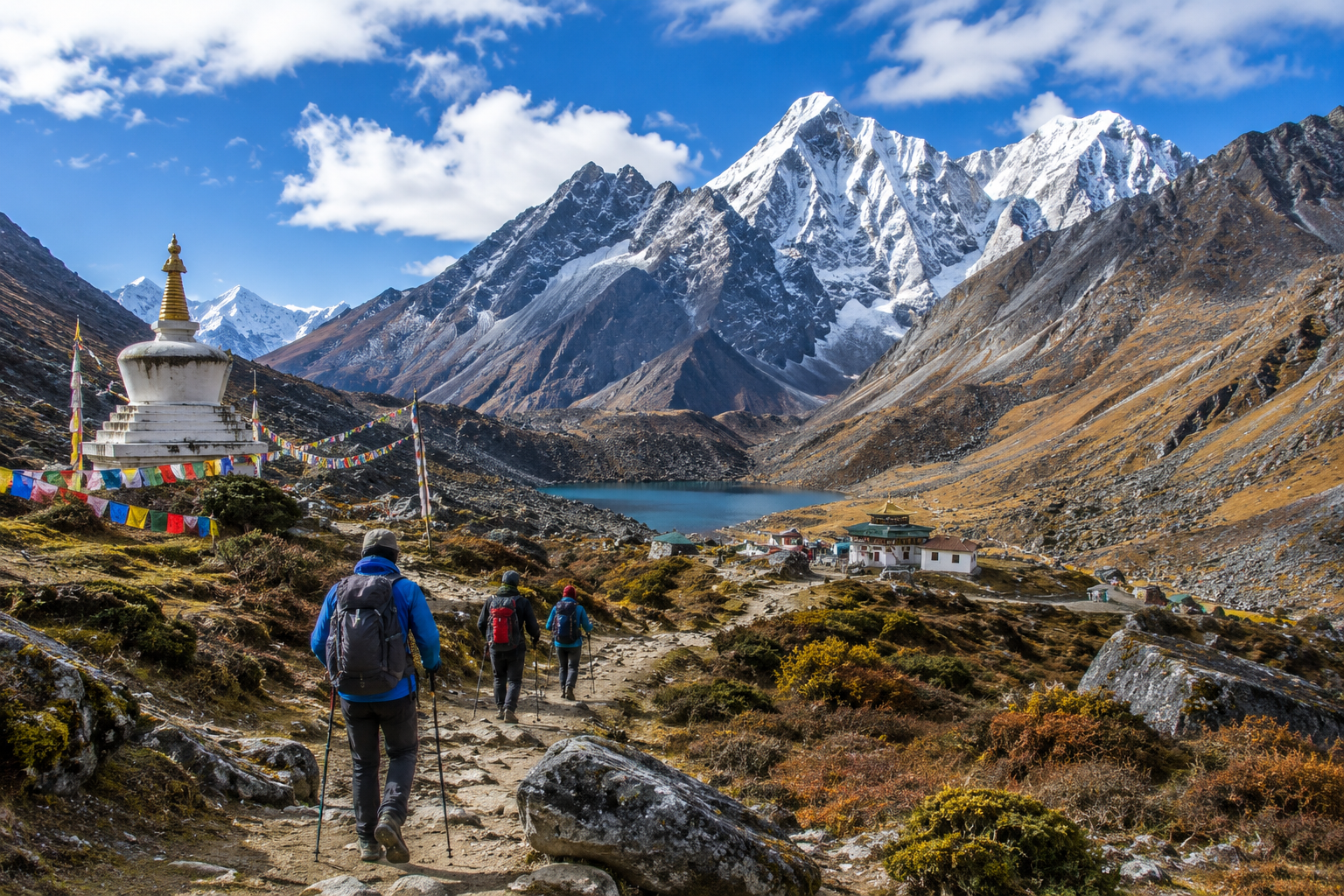
During the trek, travellers walk through rhododendron forests, yak-grazing
areas, monastery landscapes and high mountain ridges.
Clear days may provide views of Mount Jomolhari and other Himalayan peaks.
A professional trekking guide, camping crew, cook and horse-assisted luggage
transport make the route more manageable.
Travellers carry only a small daypack while the crew handles tents, meals and
camp logistics.
Why Choose the Druk Path Trek?
The druk path trek bhutan route is ideal for travellers who
want a short but immersive Himalayan camping experience.
Unlike longer expeditions into remote northern regions, the route conveniently
connects Paro with Thimphu.
This makes it easier to combine trekking with cultural sightseeing before or
after the trail.
The journey offers:
- Six days of guided trekking
- An ancient route between Paro and Thimphu
- Remote camps beneath mountain ridges
- Views of Jomolhari in clear weather
- High-altitude lakes such as Jimilang Tsho and Simkotra Tsho
- Jili Dzong and mountain monasteries
- Yak pastures and herder settlements
- Rhododendron and pine forests
- Professional trekking support
- Horse-assisted luggage transport
- Complete camping equipment
- Freshly prepared meals
- Flexible extensions in Bhutan
Among available bhutan adventure tours, this journey is
especially suitable for visitors who want trekking, camping and Buddhist
culture within a relatively compact itinerary.
What Makes the Route Special?
The druk path trek bhutan experience combines natural
scenery with Bhutan’s living spiritual traditions.
The route begins near the National Museum in Paro and climbs towards Jili La
Pass.
It then follows ridges and highland trails towards remote lakes before
descending through Phajoding into Thimphu.
Along the way, travellers may visit Jili Dzong, see small hermitages, cross
prayer-flag-covered passes and walk near yak camps.
The highland lakes are among the route’s most memorable features.
Jimilang Tsho is surrounded by rocky slopes and open mountain scenery, while
Simkotra Tsho provides a peaceful camp near the highest sections of the
route.
This balance of walking, camping, scenery and cultural encounters makes the
trek a strong choice for travellers comparing different
bhutan adventure tours.
Trekking Difficulty and Fitness Level
The trek is considered moderate in distance but challenging because of
altitude.
Daily walking usually ranges from approximately three to five hours.
The route includes long ascents, descents, uneven paths, rocky slopes and
camps above 3,500 metres.
The highest pass is approximately 4,235 metres, so travellers should allow
time to acclimatise before starting the trek.
The druk path trek bhutan itinerary is best suited to
travellers with reasonable cardiovascular fitness, previous hill-walking
experience and confidence on uneven terrain.
Professional mountaineering skills are not required.
However, regular walking, stair climbing and endurance training before
departure can make the experience more comfortable.
Any medical conditions, altitude concerns or mobility restrictions should be
discussed before confirming the journey.
Camping and Trekking Support
Comfortable organisation is an important part of our
bhutan adventure tours.
A professional trekking team normally includes an English-speaking guide,
cook, support staff and horsemen.
The crew transports the main luggage, sets up camp and prepares meals.
Travellers generally carry only water, personal essentials, rain protection
and items needed during the day.
Camping equipment may include:
- Sleeping tents
- Dining or kitchen tent
- Basic toilet arrangement
- Cooking equipment
- Camp furniture where available
- Luggage horses
- Trekking support staff
Up to a specified luggage weight can be carried by horses.
Soft duffel bags are usually more suitable than rigid suitcases because they
are easier to secure and transport.
Waterproof inner bags are recommended to protect clothing and personal items.
Suggested Six-Day Druk Path Trekking Itinerary
Day 1 – Paro to Jili Dzong
Begin the druk path trek bhutan near the National Museum,
also known as Ta Dzong.
The first day is relatively short in distance but includes a significant
ascent of more than 1,000 metres.
Walk past Kuenga Choling Lhakhang and continue towards Damcheno village,
known for stone houses and apple orchards.
The trail climbs through forest towards Jili La Pass before descending
slightly to the campsite below Jili Dzong.
Approximate trekking details:
- Distance: 10 kilometres
- Walking time: 4–5 hours
- Ascent: approximately 1,115 metres
- Descent: approximately 40 metres
- Camp elevation: approximately 3,550 metres
The trekking crew will set up sleeping tents, cooking facilities and the
basic camp area before arrival.
Day 2 – Jili Dzong to Jangchulakha
Begin the day with a visit to Jili Dzong, a remote 15th-century
fortress-monastery.
Continue along the mountain ridge while looking for Himalayan birdlife and
distant snow-covered peaks.
On clear days, Mount Jomolhari may be visible.
The trail passes Jimena Gompa, yak-grazing areas and seasonal herder camps
surrounded by rhododendron forests.
Approximate trekking details:
- Distance: 10 kilometres
- Walking time: around 4 hours
- Ascent: approximately 425 metres
- Descent: approximately 50 metres
- Camp elevation: approximately 3,750 metres
This section shows why the journey is frequently included in active
bhutan adventure tours.
Day 3 – Jangchulakha to Jimilang Tsho
Follow the mountain trail towards a viewpoint at approximately 3,960 metres.
Walk across grassy meadows before descending through rhododendron groves.
Cross Langye Ja La Pass and continue towards rocky slopes and the lunch area.
After lunch, climb towards a stupa at approximately 4,180 metres.
Mount Jomolhari may appear again when conditions are clear.
Continue to Jimilang Tsho, a remote alpine lake and the location of the third
camp.
Approximate trekking details:
- Distance: 10 kilometres
- Walking time: around 4 hours
- Ascent: approximately 370 metres
- Descent: approximately 375 metres
- Camp elevation: approximately 3,870 metres
The lakeside setting is one of the main highlights of the
druk path trek bhutan.
Day 4 – Jimilang Tsho to Simkotra Tsho
Climb from the lake towards a mountain ridge at approximately 4,010 metres.
Continue to a viewpoint marked by prayer flags, where Janye Tsho may be
visible below.
Descend into a yak pasture and begin another gradual ascent towards Simkotra
Tsho.
The route reaches approximately 4,150 metres before descending or contouring
towards the campsite.
Approximate trekking details:
- Distance: 11 kilometres
- Walking time: around 4 hours
- Ascent: approximately 820 metres
- Descent: approximately 400 metres
- Camp elevation: approximately 4,110 metres
This high-altitude day is one of the most demanding and rewarding stages of
the route.
Day 5 – Simkotra Tsho to Phajoding
Begin with an ascent towards Labana and Labana La Pass.
On clear days, travellers may enjoy panoramic views of Jomolhari, Dochula
Pass and other Himalayan peaks.
After crossing another high pass, the Thimphu Valley gradually comes into
view.
A detour may be possible to Thujidrak Gompa, a secluded meditation site built
into a cliff.
Continue to the campsite near monasteries and hermitages at Phajoding.
Approximate trekking details:
- Distance: 10 kilometres
- Walking time: 3–4 hours
- Ascent: approximately 130 metres
- Descent: approximately 680 metres
- Camp elevation: approximately 3,750 metres
The combination of Himalayan views and Buddhist sites adds cultural depth to
these bhutan adventure tours.
Day 6 – Phajoding to Thimphu
Spend time visiting the nearby monasteries and temples before beginning the
final descent.
Walk through forest paths towards Thimphu Valley.
Some shortcuts may reduce the distance but can be steep and demanding on the
knees.
Pass a chorten, cross the river and continue towards Motithang, where the
driver meets the group.
Approximate trekking details:
- Distance: 5 kilometres
- Walking time: around 3 hours
- Descent: approximately 1,130 metres
The druk path trek bhutan ends in Thimphu, making it easy to
continue with cultural sightseeing or a longer Bhutan itinerary.
Best Time to Complete the Trek
The most suitable seasons are generally spring and autumn.
March to May
Spring offers flowering rhododendrons, moderate daytime temperatures and good
trekking conditions.
Higher camps can still be cold, especially at night.
September to November
Autumn often provides clearer mountain views, stable weather and dry trails.
This is a popular season for bhutan adventure tours, so
trekking permits, guides and flights should be arranged in advance.
Summer and Winter Conditions
The summer monsoon may bring rain, cloud cover, slippery trails and reduced
mountain visibility.
Winter can bring very cold nights, snow and difficult conditions at high
passes.
The operating season should always be confirmed according to current trail
and weather conditions.
What to Pack for the Trek
Suitable equipment is important because the route crosses exposed ridges and
high camps.
Recommended items include:
- Broken-in trekking boots
- Warm base layers
- Insulated jacket
- Waterproof jacket and trousers
- Gloves and warm hat
- Sun hat and sunglasses
- High-SPF sunscreen
- Reusable water bottle
- Small daypack
- Trekking poles
- Headlamp
- Personal medication
- Basic first-aid items
- Dry bags or plastic liners
- Comfortable camp clothing
- Power bank
- Camera and spare batteries
Travellers should pack for changing temperatures, wind, rain and cold nights.
Altitude and Acclimatisation
Altitude should be taken seriously throughout the trek.
The route reaches more than 4,000 metres and includes several nights at high
elevation.
Travellers should ideally spend time in Paro before starting, drink sufficient
water, walk at a steady pace and avoid unnecessary overexertion.
Symptoms such as persistent headache, nausea, unusual fatigue or breathing
difficulty should be reported to the guide immediately.
The trekking guide may adjust the pace, route or schedule when safety requires
it.
This careful support is an important part of professionally organised
bhutan adventure tours.
Who Is This Journey Suitable For?
The trek may suit:
- Active couples
- Solo travellers
- Small private groups
- Experienced hill walkers
- First-time Himalayan trekkers with good fitness
- Nature photographers
- Birdwatchers
- Adventure travellers
- Visitors interested in Buddhist culture
- Travellers comfortable with tented accommodation
- Guests seeking a short high-altitude route
The druk path trek bhutan is not recommended for travellers
who are uncomfortable with basic camping, high altitude or uneven trails.
The itinerary can be extended with hotel nights, cultural sightseeing and
easier walks before or after the trek.
Customise Your Bhutan Trekking Journey
The route can be adapted according to available time, fitness, walking pace
and wider travel interests.
Customisation options may include:
- Additional nights in Paro
- Thimphu sightseeing
- Tiger’s Nest Monastery hike
- Punakha extension
- Haa Valley visit
- More acclimatisation time
- Private trekking departure
- Slower trekking pace
- Additional cultural activities
- Hotel upgrades before or after trekking
- Photography-focused stops
- Meditation or monastery visits
Our bhutan adventure tours can combine the Druk Path with
cultural destinations, village experiences and selected outdoor activities.
Suggested Package Inclusions
- English-speaking assistance
- Professional trekking guide
- Trekking support crew
- Cook and assistant cook
- Horse-assisted luggage transport
- Complete camping equipment
- All scheduled trekking meals
- Overnight camps specified in the itinerary
- Private vehicle and dedicated driver
- Bhutan visa where specified
- Services listed in the confirmed programme
- Travel documentation and vouchers
- Local assistance during the journey
Final inclusions depend on the confirmed itinerary and package quotation.
Suggested Package Exclusions
- International airfare
- Paro hotel before the trek
- Thimphu hotel after the trek
- Travel and cancellation insurance
- Tips for guides, drivers and trekking staff
- Personal trekking equipment
- Personal expenses
- Mineral water during trekking
- Optional sightseeing
- Medical or evacuation expenses
- Services not listed in the confirmed package
Boiled or treated water may be provided during trekking according to the
final arrangements.
Why Book This Trek With Us?
Planning this trek requires coordination between permits, guides, camp
equipment, food supplies, luggage horses, transfers and accommodation.
We assist travellers with:
- Personalised itinerary planning
- Professional trekking guide
- Experienced camping team
- Horse-assisted luggage transport
- Freshly prepared meals
- Private transfers
- Bhutan visa assistance
- Pre-trek and post-trek extensions
- Equipment guidance
- Flexible pacing
- Cultural sightseeing
- Local support throughout the route
Our bhutan adventure tours are organised around realistic
walking times, altitude, seasonal conditions and traveller safety.
Druk Path Trek FAQs
1. How difficult is the Druk Path trek?
The druk path trek bhutan is moderate in daily distance but
challenging because it reaches elevations above 4,000 metres.
Travellers should have reasonable fitness and prepare for repeated ascents,
descents and cold nights.
2. How many days does the trek take?
The standard route takes six trekking days from Paro to Thimphu.
Additional days can be added for acclimatisation, sightseeing or a slower
pace.
3. What is the highest elevation?
The highest pass reaches approximately 4,235 metres.
Exact readings can vary slightly depending on the trail and measurement
source.
4. Is previous trekking experience required?
Previous high-altitude experience is helpful but not always essential.
Fit travellers with regular hill-walking experience may complete the route
with suitable preparation and acclimatisation.
5. Where do travellers sleep?
Travellers stay in tents at designated camps along the route.
The trekking crew sets up the camp and prepares meals.
6. Who carries the luggage?
Horses carry the main luggage, camping equipment and supplies.
Travellers carry a small daypack with water, clothing layers and personal
essentials.
7. Can the trek be combined with sightseeing?
Yes. The route connects Paro and Thimphu and can be combined with Tiger’s
Nest, Punakha, Haa Valley and other destinations.
8. What happens if the weather changes?
The guide may modify the pace, campsite or daily programme according to
weather and trail conditions.
Safety takes priority over the planned schedule.
9. Is the trek suitable for children?
Suitability depends on age, fitness, previous walking experience and comfort
at altitude.
Families should discuss individual requirements before confirming the trek.
10. Can the route be completed faster?
Strong and experienced travellers may request a shorter schedule, but
adequate acclimatisation and safety must remain the priority.
Plan Your Bhutan Trekking Adventure
Complete the classic druk path trek bhutan through high
mountain passes, alpine lakes, forests, monasteries and remote camps.
Combine the trek with customised bhutan adventure tours
covering Paro, Thimphu, Punakha, Haa Valley or other destinations.
Share your preferred travel dates, group size, fitness level, trekking
experience and accommodation requirements to receive a personalised itinerary
and quotation.